

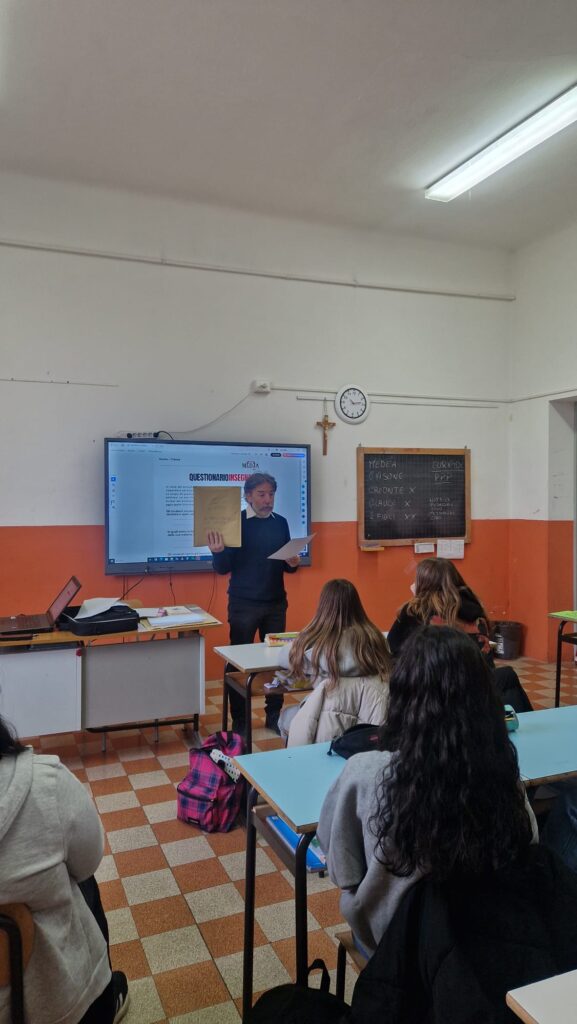
Between January and April 2026, two workshops as part of the Medea Sum project took place at the Istituto San Francesco di Sales in Città di Castello, involving a total of 37 secondary school pupils. A structured, interdisciplinary and inclusive programme that interwove literature, theatre, law and active citizenship.
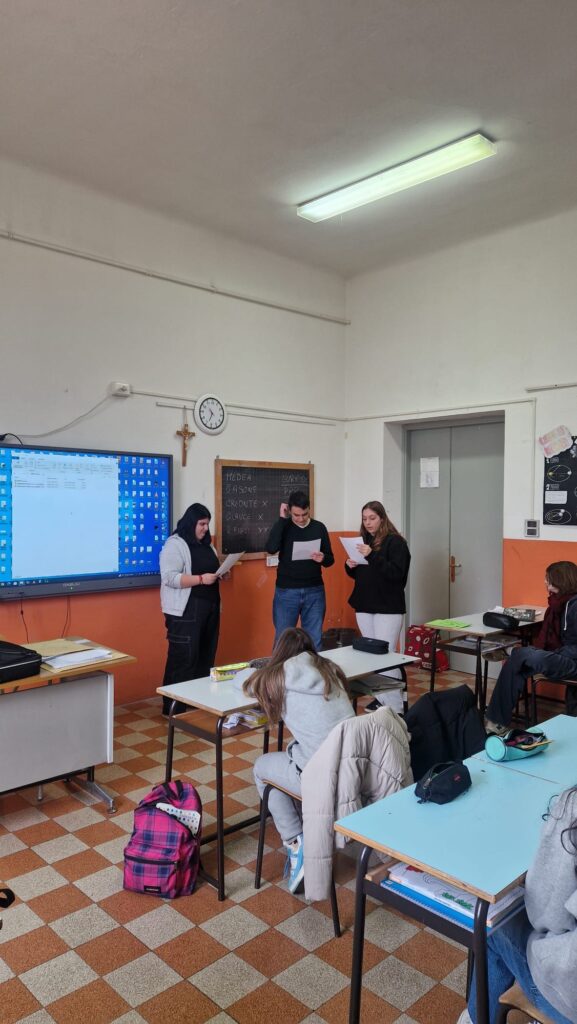
Guided by theatre trainer Mauro Silvestrini and project coordinator and theatre trainer Valentina Gianfranceschi, the students were taken on an experience that went beyond the boundaries of traditional teaching, transforming the study of the myth of Medea into a collective inquiry.
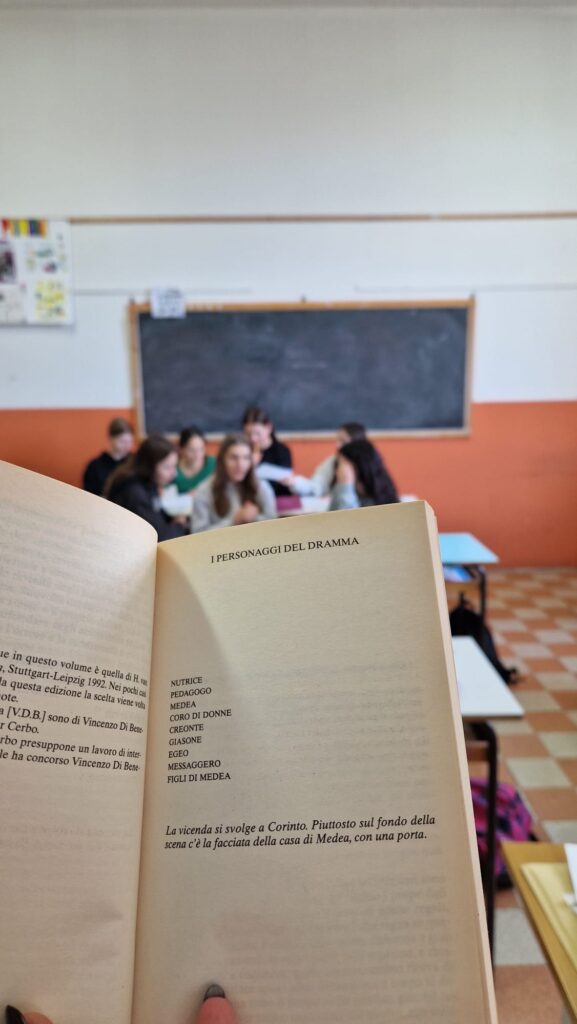
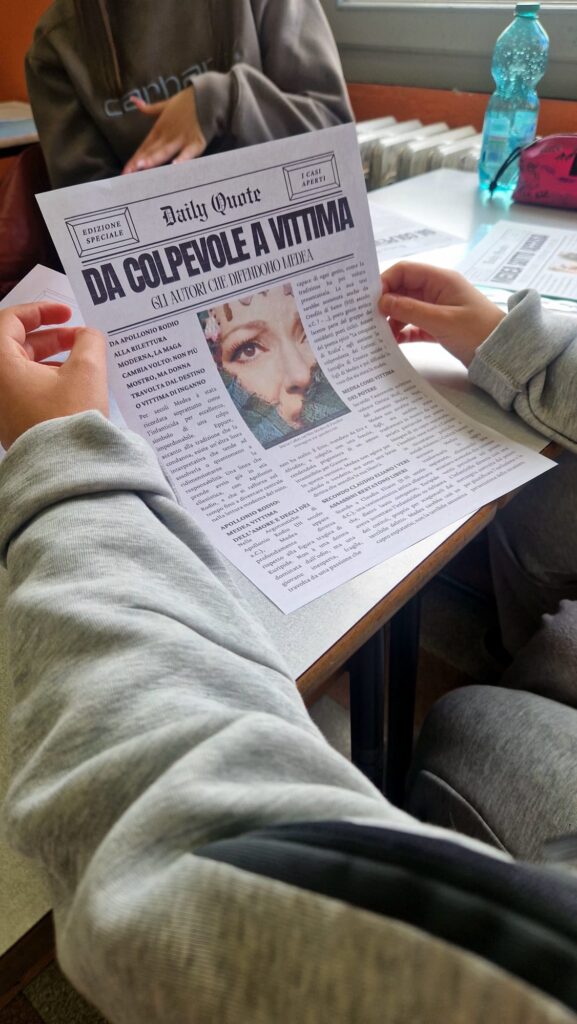
From reading to doubt: questioning certainties
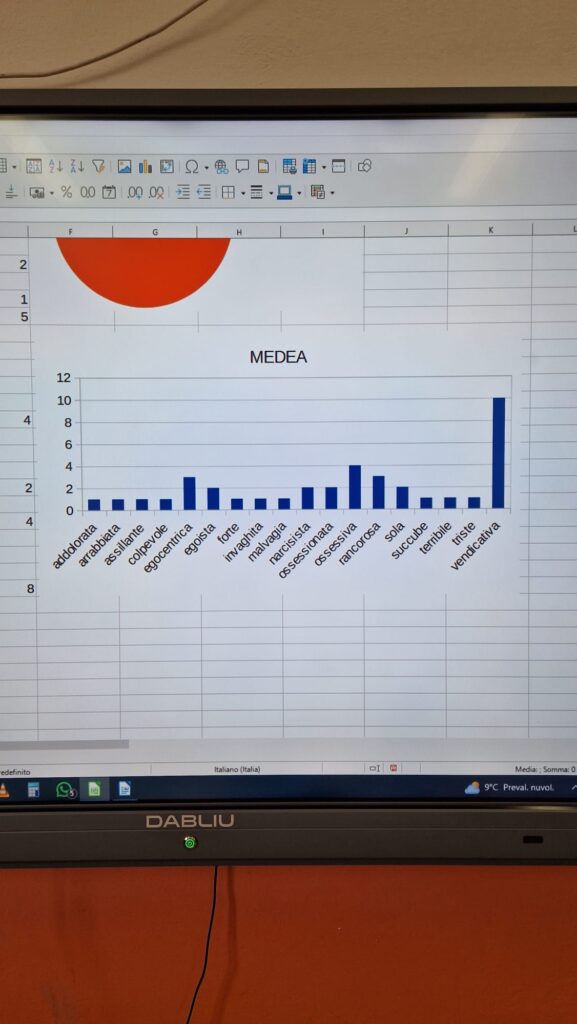
The starting point was a classroom reading of Euripides’ tragedy, which initially led the students to view Medea as entirely guilty. However, the heart of the project lay precisely in the gradual dismantling of this certainty.
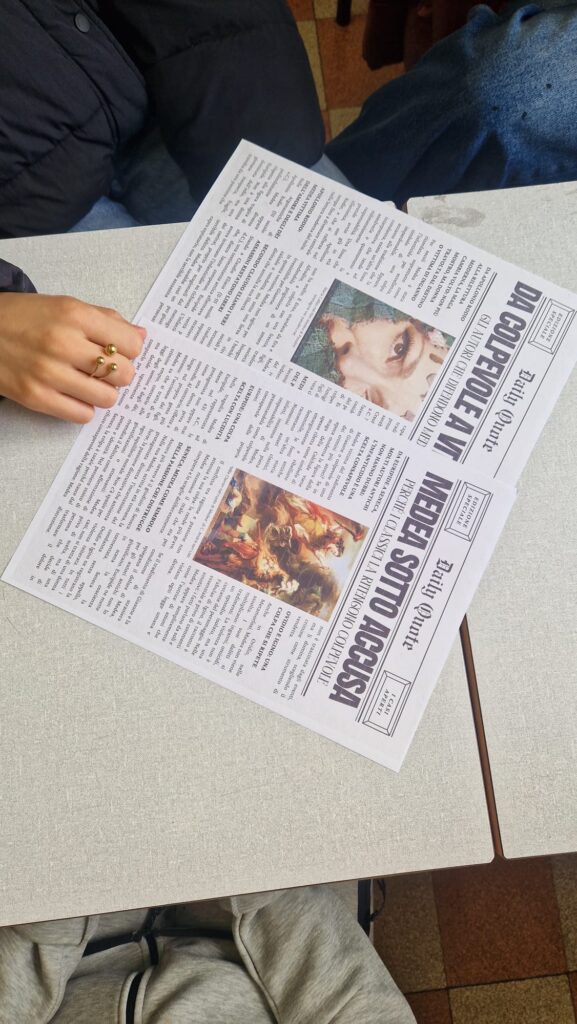
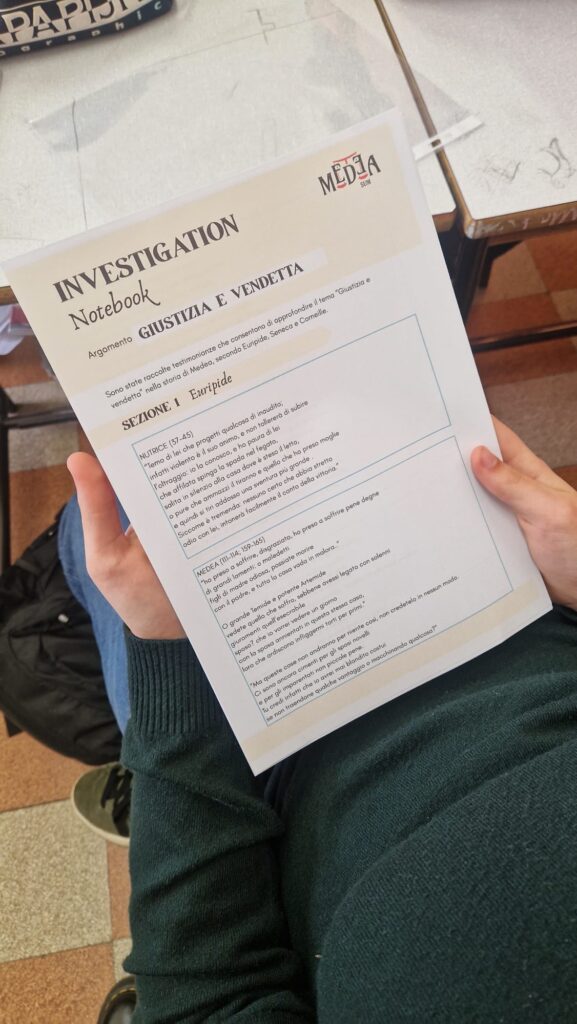
Through materials provided by the project — texts by various authors, in-depth articles and character profiles — the students discovered how the myth of Medea has been reinterpreted over time in ways that are often very divergent. This comparison raised new questions and stimulated a critical approach to the concept of truth.
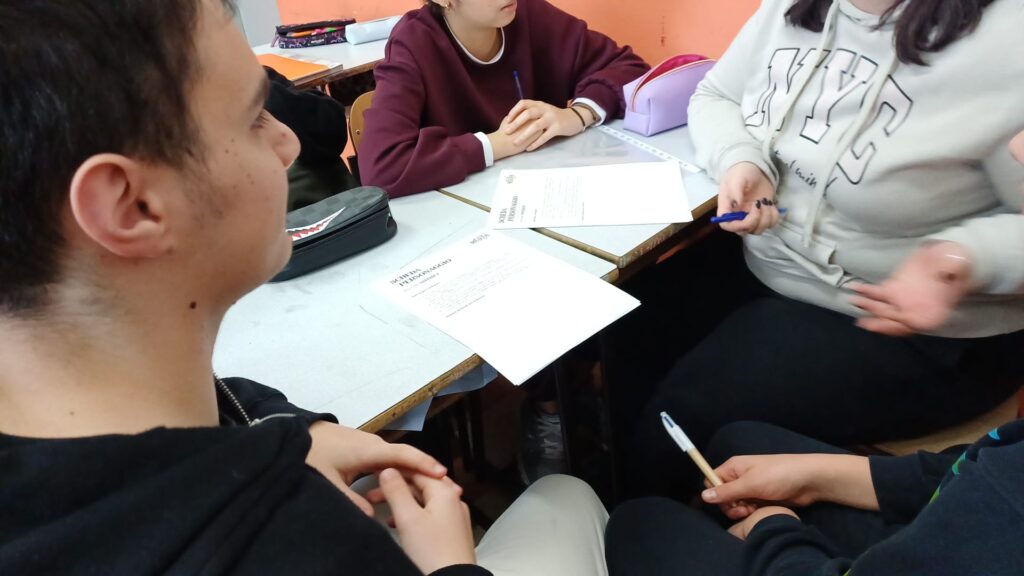
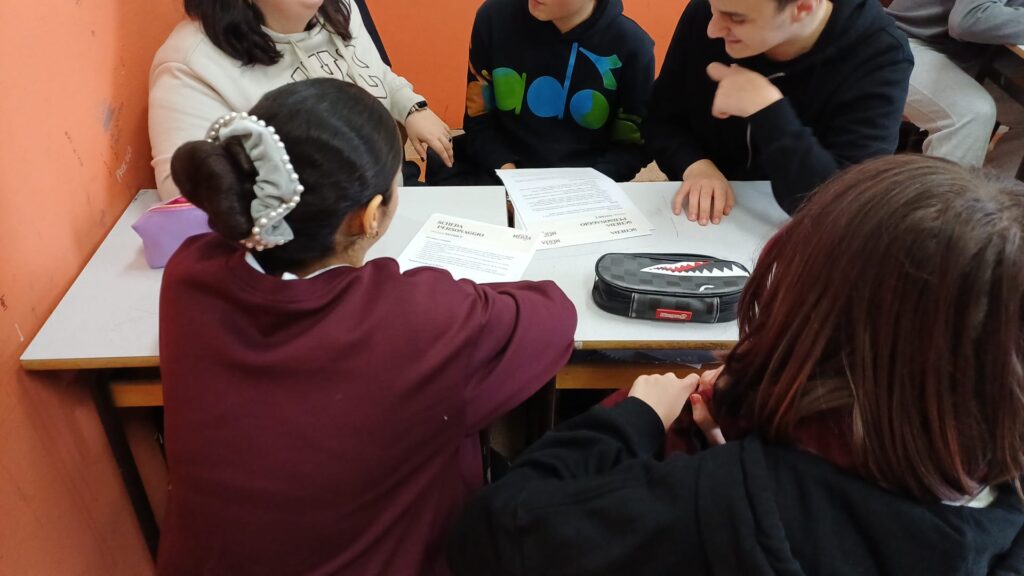
The work was carried out in small groups, using tools such as the Investigation Notebook and the Sequential Question and Insight Diagram, which enabled the construction of investigative pathways consisting of questions, hypotheses and possible answers. The process led the students to recognise the complexity of the myth, without arriving at a single definitive answer, but by thoroughly questioning their initial judgement.
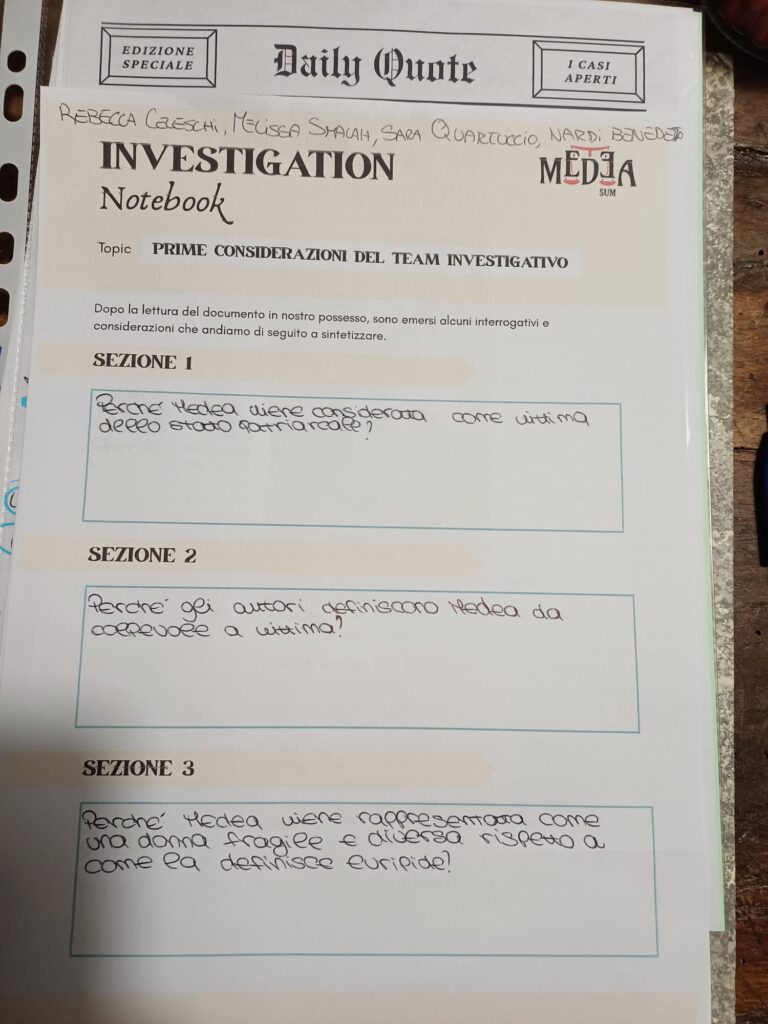
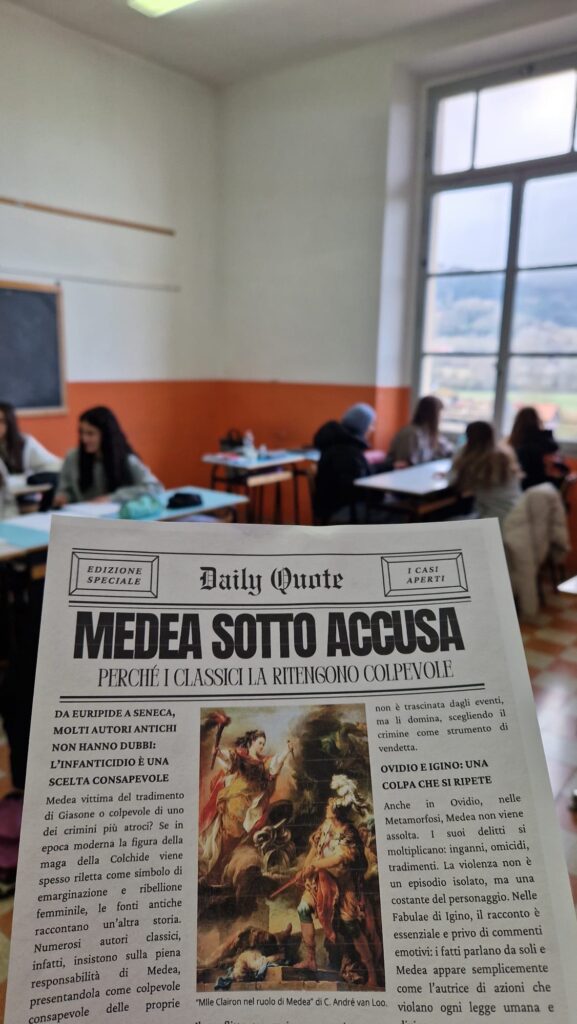
An ‘atypical’ process: from theatre to the language of television
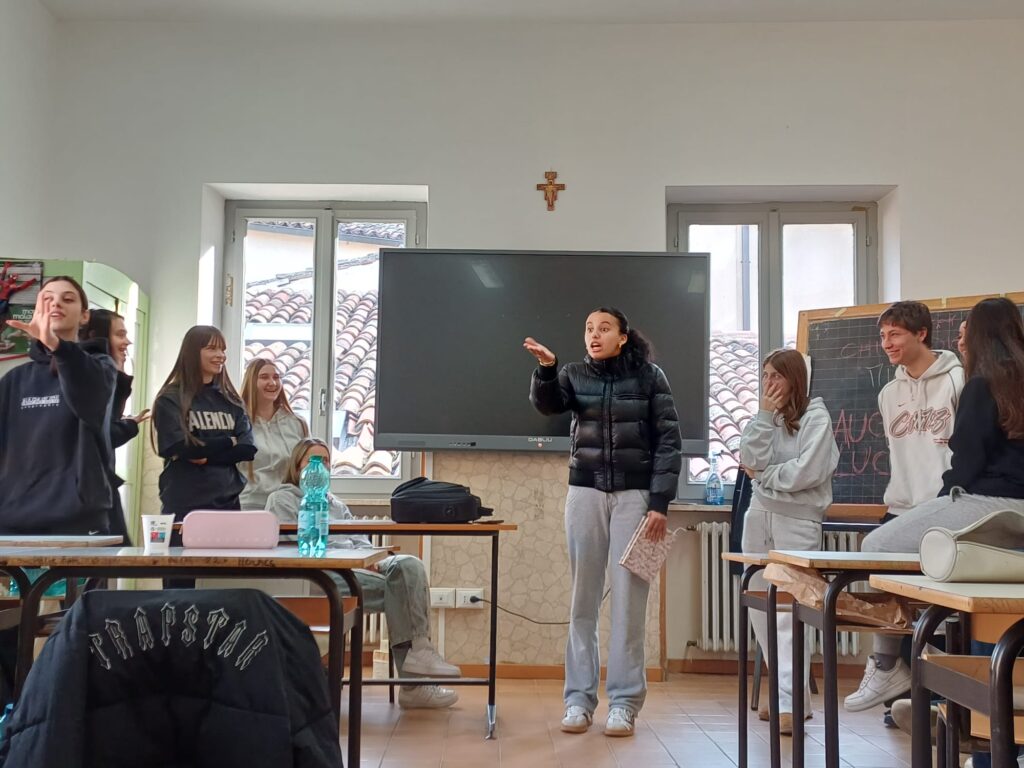
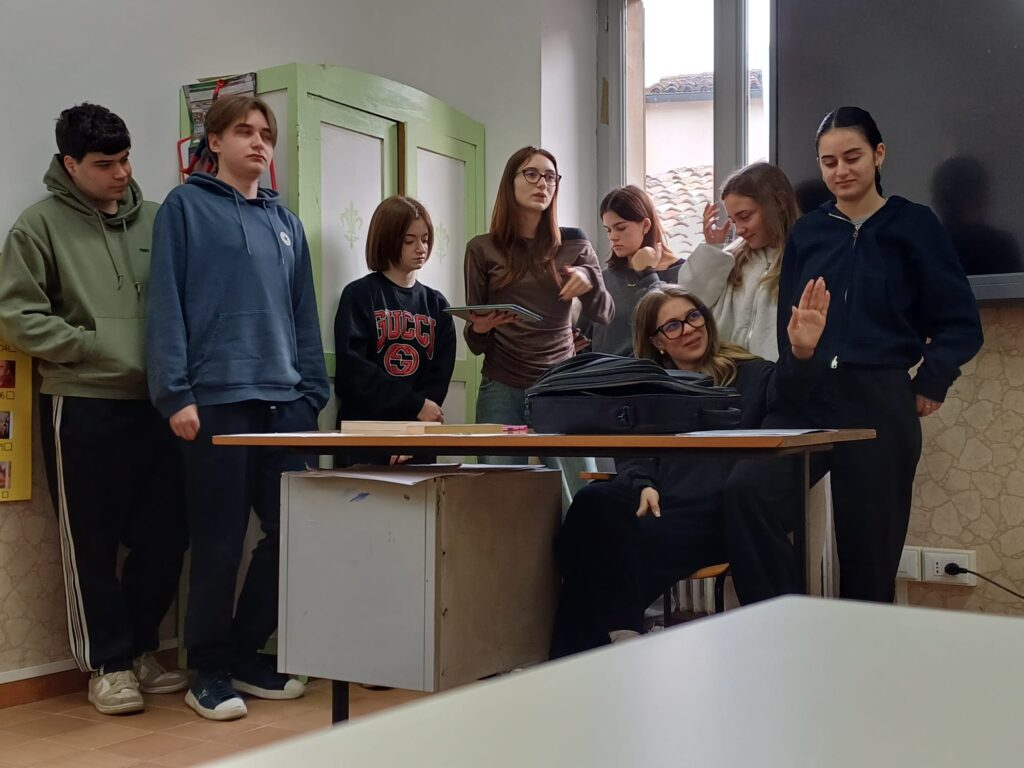
The final outcome of the workshop was the creation of a ‘trial of Medea’ in an unconventional format. The students chose to draw inspiration from the language of television talk shows, alternating direct testimonies from the characters with journalistic reconstructions of the story.
The aim was clear: to create a multimedia product capable of speaking to a broad, contemporary audience.
The students managed all stages of the work independently:
- conceptualisation of the format
- scriptwriting, based on quotes and reflections developed during the course
- organising the filming
- playing the roles (journalists, presenters, characters, lawyers, video reporters)
The figure of the judge was conceived as a facilitator of dialogue rather than a judicial authority.
Engaging with the public: the myth today
One of the most significant moments was the direct involvement of the community. The students took the ‘trial’ out onto the streets, interviewing members of the public to gather contemporary views on the myth of Medea.
This engagement highlighted how the figure of Medea continues to raise questions even today. Many interviewees expressed doubts about her total guilt, confirming the need to symbolically reopen the case.
An interesting generational difference thus emerged:
- younger people, less familiar with the myth, tended to make quicker and more definitive judgements
- adults, with greater knowledge, showed greater caution and openness to interpretation
Some interviewees also referred to more modern interpretations, in which Medea appears not only as a tragic figure, but also as a woman capable of standing up to power (as portrayed by Christa Wolfe).
Skills developed: learning by doing
The workshop provided a rich context for the development of cross-curricular and subject-specific skills:
- critical thinking and textual analysis
- research and problem-solving skills
- teamwork and communication
- argumentation and public speaking
- analytical writing and collaborative production
Theatrical activities, particularly improvisation and role play, have effectively supported the students’ expressive and relational development, thanks to inclusive and participatory methodologies. The contribution of the teachers of Italian and Latin, law and art was also fundamental, as they integrated the workshop into the civic education curriculum.
Evaluations and future prospects
The feedback received was overwhelmingly positive. Students particularly appreciated:
- the opportunity to engage with one another and work together
- the active, workshop-based approach
- the creation of a tangible, shareable product
Teachers also recognised the value of the project in promoting reflection on complex issues and in stimulating critical thinking.
The school has expressed an interest in repeating the experience in the future, partly thanks to the availability of online materials that make the model easy to implement independently.
Although the limited time did not allow for a full exploration of the theatrical dimension, this aspect did not prove to be a limitation, as the main objective of the project was the development of critical and participatory skills.
Particularly interesting was the possibility of adapting the model to other disciplines, such as philosophy, confirming the effectiveness of this approach in making even complex content accessible and engaging.
Medea, from a figure of myth, was thus transformed into a living tool for inquiry, discussion and active citizenship.