

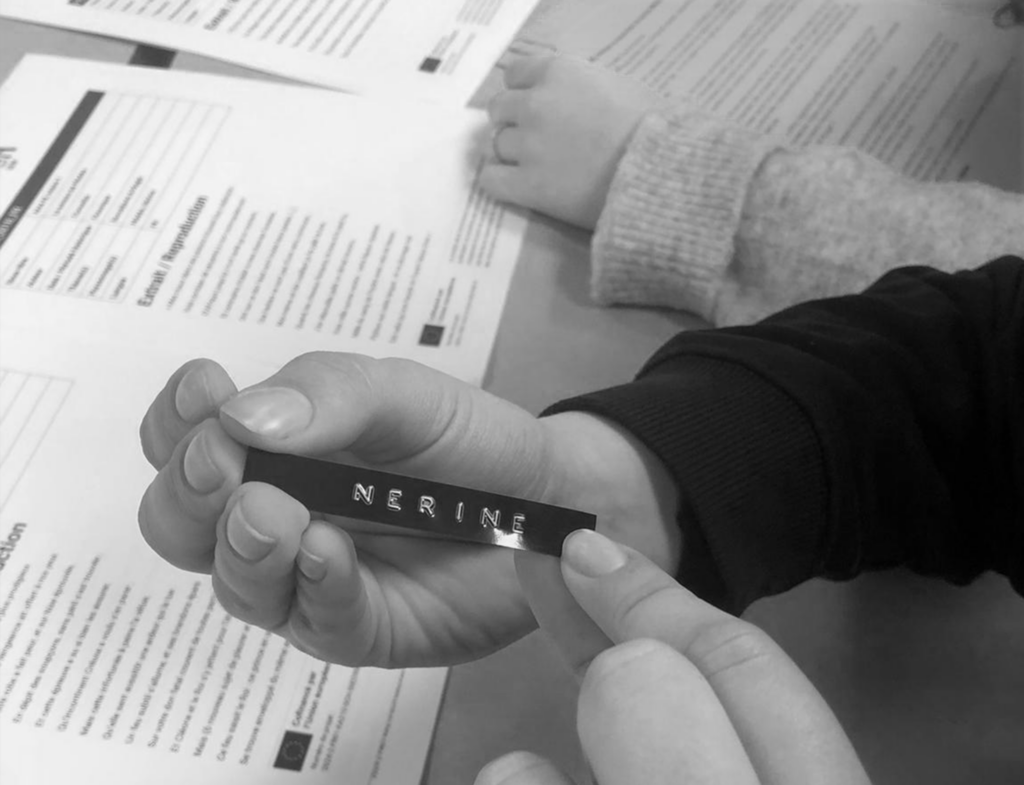
Second hearing in the Medea case at the Albert Vinçon middle school. The file is open, the evidence classified, the roles assigned. After reopening the investigation, the third-year students are now continuing the preliminary proceedings by tackling a new decisive step: making the voices of Medea’s entourage heard.
Examining witnesses to shed light on the case
The objective of this second session was clear: to analyze the myth through the eyes of the secondary characters and to understand everyone’s role in the tragic mechanics. Each group received two new documents added to the file: a character profile sheet and a preparatory testimony sheet. Based on these documents, the students had to determine: what their character truly knows; what they ignore — or pretend to ignore; their position in the trial: witness for the prosecution, witness for the defense, neutral, or ambiguous; and the textual elements capable of supporting their future deposition.
Reading between the lines of the myth
The exercise proves to be demanding: the students have not yet studied Corneille’s play in its entirety. Their knowledge of the case remains partial, which requires the facilitators to regularly fill in the context: power dynamics between the characters, political stakes, the logic of exile, as well as family and diplomatic tensions. But this uncertainty quickly becomes a driving force for analysis. The students no longer settle for summarizing the facts. They begin to question the gray areas of the narrative. Did Jason measure the consequences of his abandonment? Did Creon act out of political prudence or fear? Did Aegeus protect Medea out of altruism… or self-interest? Would other witnesses have told a different version of the story?
An increasingly complex trial
As the exchanges progress, one thing becomes obvious: the Medea case can no longer be reduced to the opposition between an accused woman and her judges. It now reveals a broader network of shared responsibilities, strategic silences, intersecting interests, and contradictory narratives.
Next step: confrontation of testimonies
The teacher plans to further enrich the investigation file with new documentary resources before the next hearing. The third session, scheduled for two hours, will mark a new stage in the procedure: the witnesses will have to leave their original groups to confront their versions in a rapid debate setup, designed like a real “judicial speed-dating”. The Medea case is moving forward. After the judge’s doubt, after the examination of the evidence, the time for testimonies has come. And one thing is becoming clear: the verdict will be harder to deliver than it seemed.