


A trembling letter signed by an aging judge
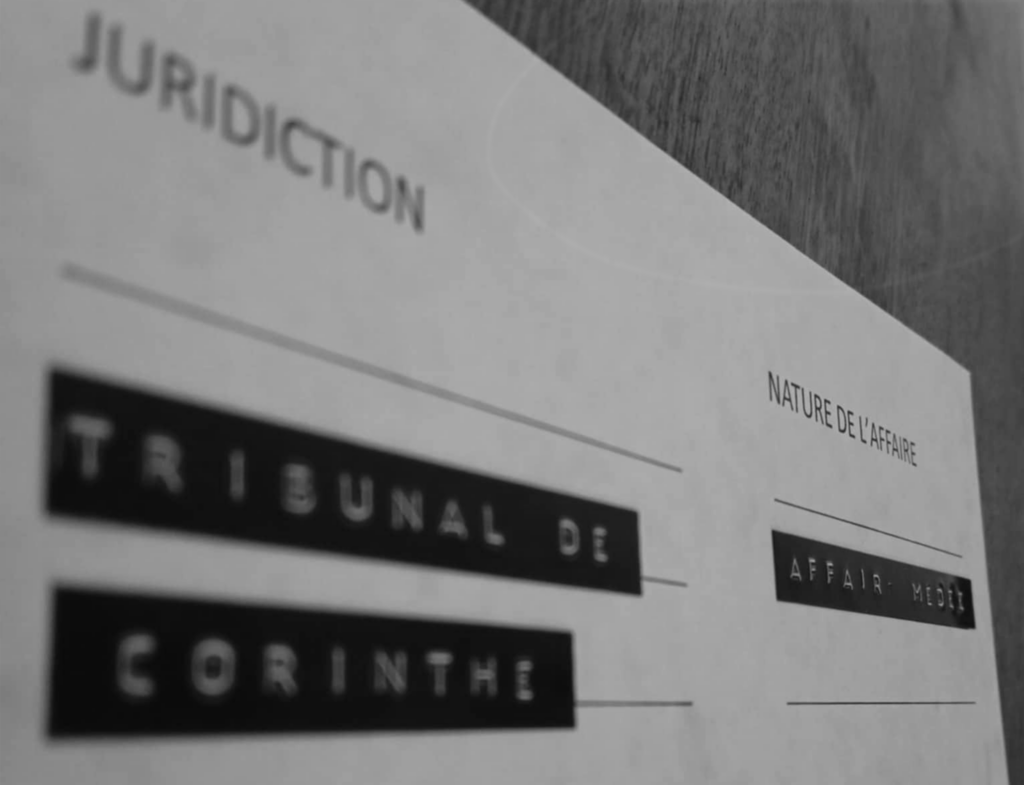
An ancient condemnation called into question. And a case believed to have been closed since Antiquity. At the Albert Vinçon middle school, a third-year class reopened the Medea file as part of an immersive educational workshop dedicated to Corneille’s tragedy. For one hour, twenty-eight students stepped into the shoes of investigators tasked with answering a question left unresolved by the fictitious magistrate David Ginzburg: “Medea is guilty, but of what?”
An ancient trial transformed into a contemporary investigation
The starting point of the activity takes the form of a confession: that of a judge consumed by doubt, who admits he may have condemned too quickly a woman passed down to posterity as a monster. In his letter, he requests the reopening of the case. It is now up to the students to examine the facts, review the testimonies, confront the versions of Jason, Creon, the nurse — and perhaps finally hear Medea’s voice. The framework is set: here, it is not a matter of passively studying a work on the curriculum, but indeed of reopening a trial.
Exhibits to make the text speak
Divided into six groups, the students each receive an investigation file including: the judge’s letter, a collection of exhibits from the study course dedicated to Corneille, and an investigation notebook to record analyses, clues, and hypotheses. Roles are then assigned by drawing lots: Medea, Jason, Creusa, Aegeus, Nerine… all the way to Corneille himself. Each group must then analyze the documents not as a simple reader, but from the perspective of their character. Faced with the depth of the file, one of them sums up the atmosphere: “It’s so well made!”
A tragic figure brought back into debate
As the investigation progresses, the first hypotheses emerge. The students bring up: an infanticide, a premeditated revenge, a manipulation, or a crime of passion. But quickly, the complexity of the case becomes apparent. Did Medea act alone? Can Jason be considered innocent? Does Creon bear a share of responsibility in the tragic escalation? Does banishment justify the violence of the reaction? The students identify the gray areas, question the silences of the text, and spot possible biases in the way the story has been transmitted.
When literature becomes an investigative field
For the teacher behind the initiative, the objective is clear: to make students discover Corneille differently, through investigation, debate, and taking a stand rather than through traditional lectures. The project indeed mobilizes much more than reading skills: text analysis, argumentation, eloquence, critical thinking, and cooperation. The students are already beginning to build their defense or prosecution strategy, select their evidence, and refine their reading of the characters. At the Albert Vinçon middle school, the investigation is only just beginning…