

There’s something quite striking about seeing a group of teenagers take ownership of a story that is over two thousand years old. At the Maison des Phénix in Brugelette, the Medea Sum project turned a Latin class into a space where literature, discussion, and creativity naturally came together.
The starting point was familiar enough. Students worked with classical texts, including excerpts in the original Latin from Seneca, alongside articles and thematic materials. They explored the figure of Medea through different lenses, looking at her story from both a literary and historical perspective. Very quickly, however, the work moved beyond simple analysis. The focus shifted towards interpretation, discussion, and personal positioning.
Themes such as gender roles, exile, power, and revenge resonated strongly with the group. Medea was no longer just a distant mythological figure. She became a character through which students could reflect on broader social issues, drawing links between ancient narratives and present-day realities.
The way the workshops were organised played a key role in this engagement. The group included students with diverse profiles, including autism and ADHD, so flexibility was essential. Participation in public speaking was never imposed, and students were encouraged to work in pairs or small groups, often choosing their collaborators. This created a calm and supportive environment where everyone could contribute according to their strengths and comfort level.
As the sessions progressed, the students gradually took control of the narrative. They analysed the main characters, mapped out relationships, and identified key moments of conflict. They also expanded the story by introducing additional figures they felt were important, enriching the original material with their own ideas. This collective work helped them build a shared understanding of the tragedy while developing their analytical and collaborative skills.
The most decisive moment came when they began designing the trial of Medea. Rather than following a predefined model, the class explored different possibilities and made their own choices. They ultimately decided to place the trial in the Underworld. This choice was both creative and meaningful. By setting the trial in a space beyond life and death, they allowed every character to be present and to speak, including those who had died. It gave a voice to figures who are often silenced and created a sense of balance in the narrative. In this setting, the trial became not only a moment of judgement but also a space where characters could confront each other, express their perspectives, and in some way find a form of resolution or peace.
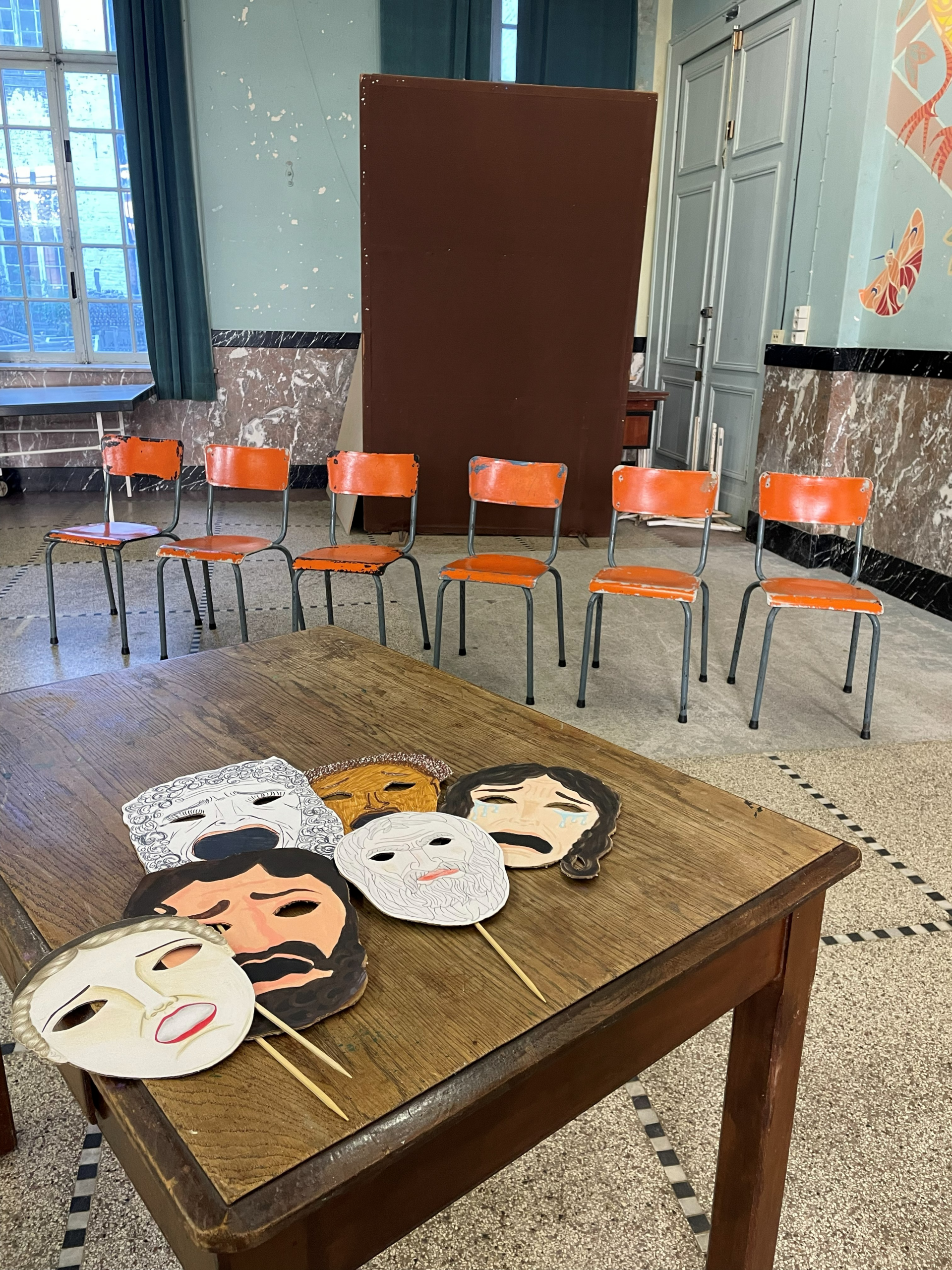
From there, the students worked on building the performance. They defined the roles, wrote the testimonies, structured the sequence of interventions, and developed the overall flow of the trial. Some chose to perform on stage, while others contributed through writing, design, or organisation. Masks and costumes were created, reinforcing the theatrical dimension of the project and helping students embody their characters.
The final performance lasted around 25 minutes and brought together students from the Latin class and the expressive arts group. It was presented to an audience of teachers, classmates, and a few parents, and was received warmly. The performance was not only the result of several sessions of preparation, but also a reflection of the students’ collective thinking and creativity.
In the end, the verdict they reached was clear and nuanced. Medea was found guilty, but so was Jason. This conclusion reflected the complexity of the discussions that had taken place throughout the project. Rather than seeking a single, definitive answer, the students engaged with the ambiguity of the story and acknowledged the shared responsibility of the characters.
What stands out most in this experience is the process itself. Through collaboration, discussion, and creative work, students were able to engage deeply with a classical text while developing their ability to think critically and express their ideas. The project created a space where literature became something active and meaningful, rooted in both personal reflection and collective exploration.
Medea in Court: A Day Between Myth and Justice
At the Athénée Royal de Dour, the Medea Sum project took on a slightly different shape. While it still revolved around the myth of Medea and the idea of putting her on trial, the experience leaned more directly into the world of justice. What emerged was a project that connected ancient tragedy with very real legal frameworks, giving students a rare opportunity to move between fiction and reality.
The work began in the classroom with a deep dive into the myth itself. This first session stood out for the diversity of perspectives brought in. An invited author introduced students not only to the well-known version of Medea, but also to lesser-known interpretations from antiquity. In some accounts, Medea is not even responsible for her children’s deaths. This immediately complicated the narrative and opened the door to a more nuanced understanding.
Students explored how the story had evolved over time, from Greek sources to modern adaptations, and were also introduced to psychological and legal perspectives on infanticide. These elements gave the discussions a different weight. Medea was no longer just a literary character, but a figure that could be examined through historical, social, and even clinical lenses. The conversations that followed showed a strong sense of empathy among the students, alongside a growing awareness of how narratives are constructed and sometimes manipulated.
The second workshop shifted the focus towards theatre, but in a very grounded and practical way. Before jumping into performance, students worked collectively to map out the relationships between characters, building a clear and shared understanding of the story. From there, they moved into exercises designed to develop listening, presence, and emotional expression.
What stood out here was the emphasis on preparation. Through simple but effective activities, students practised how to express emotions, how to respond to others, and how to build arguments. One exercise in particular, based on quick exchanges of arguments using evidence cards, helped them learn how to react, adapt, and defend a position without overthinking. It created a dynamic atmosphere where speaking became more natural and less intimidating.
The final stage of the project brought everything together in a very concrete way. Instead of imagining a courtroom, the students stepped into a real one.
They spent a full day at the Tribunal of Mons, observing actual court proceedings in the morning. This experience grounded the project in reality. They saw how roles are distributed, how decisions are made, and how structured and formal the justice system is. It gave them a reference point that no classroom simulation could fully replicate.
In the afternoon, a lawyer guided them through the key concepts of criminal law. They discussed ideas such as premeditation, responsibility, and mitigating circumstances. These were not abstract notions anymore, but tools the students could use to build their own arguments.
When it came time to prepare the trial, the structure was clear. Students organised themselves into prosecution, defence, and judges. With the support of the teacher and lawyer, they refined their arguments and thought carefully about how to present them.
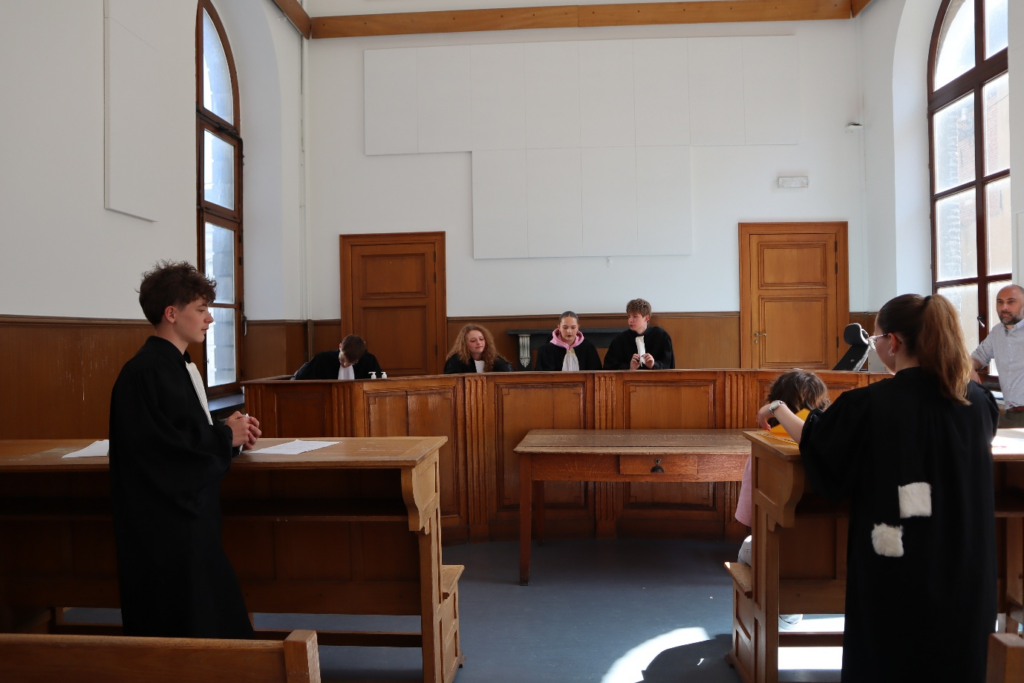
The final performance took place in the courtroom itself. Wearing real lawyers’ robes, the students stepped into their roles with a new level of seriousness. The setting changed everything. The space demanded attention, precision, and a certain formality, which the students naturally adapted to.
The verdict they reached reflected both their engagement with the myth and their understanding of the law. Medea was found guilty, but with mitigating circumstances.
This outcome showed how the project had evolved in this context. The question was no longer only about moral judgement, but also about legal responsibility. Students had to consider intention, context, and the limits of accountability, bringing together everything they had explored throughout the workshops.
What makes the Dour implementation particularly interesting is this strong connection to the real world. By placing the project partly outside the classroom, in an actual court of law, it gave students a different perspective on both the myth and the concept of justice. The experience was not just about interpreting a story, but about understanding how societies judge, justify, and sometimes reconsider actions.
Through this process, Medea became more than a figure to analyse. She became a case to examine, debate, and judge, using tools that felt both ancient and very current at the same time.